Altoona Historical Society
Transforming fragmented historical records into an accessible interactive archive for public exploration
ARCHIVAL SYSTEMS — INTERACTIVE KIOSK — CULTURAL PRESERVATION
Context
The Altoona Historical Society needed a way to preserve and present decades of local history through an interactive public-facing experience.
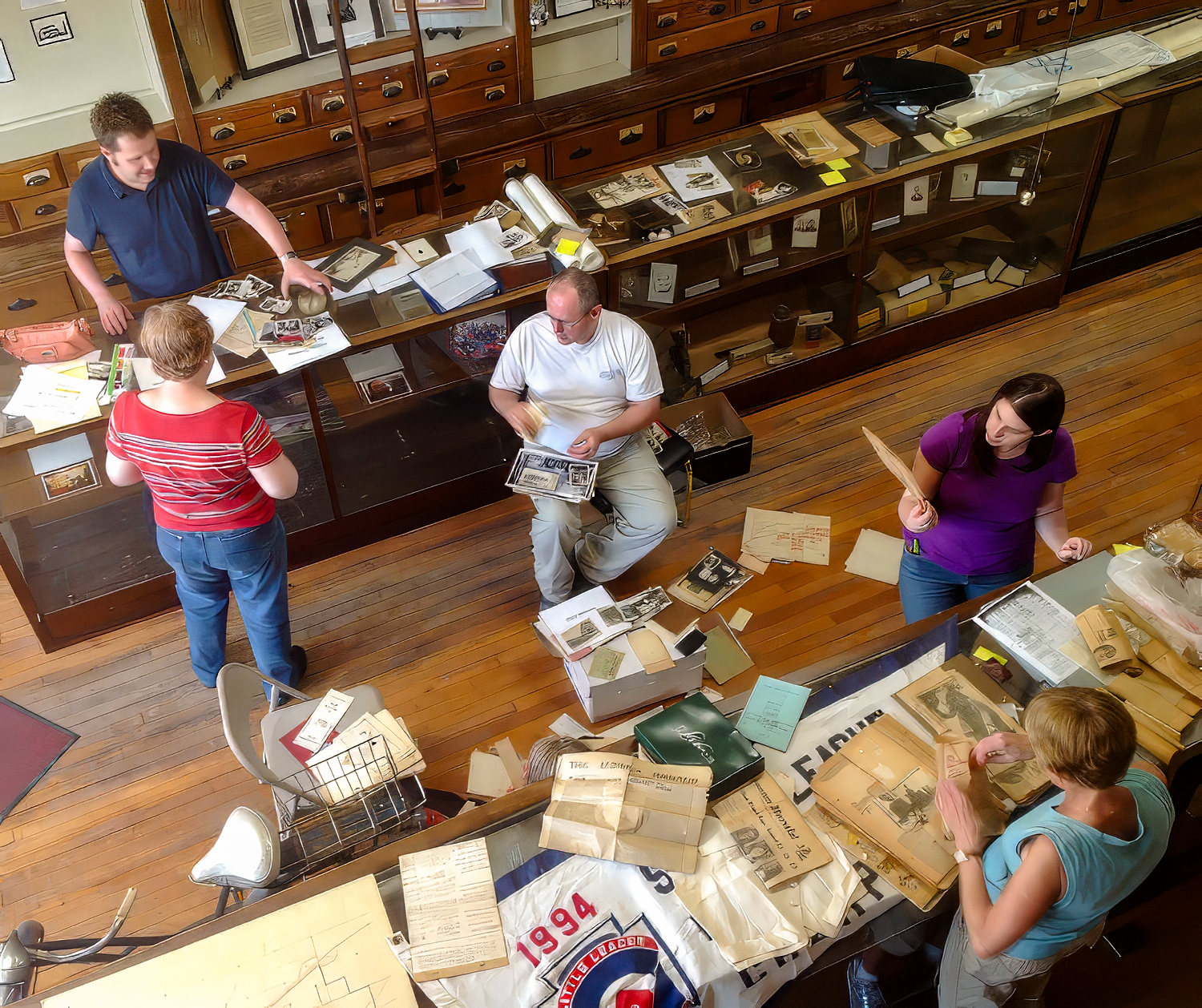
Historical content existed across scanned documents, aging photographs, PDFs, newspaper clippings, and physical artifacts, making accessibility and long-term presentation increasingly difficult.
Problem
• Historical materials lacked a unified digital structure
• Archival assets varied significantly in quality and format
• Existing materials were difficult to explore publicly
• The experience needed to balance preservation with accessibility
• Content required long-term flexibility for future additions and updates
Approach
Preservation through interaction
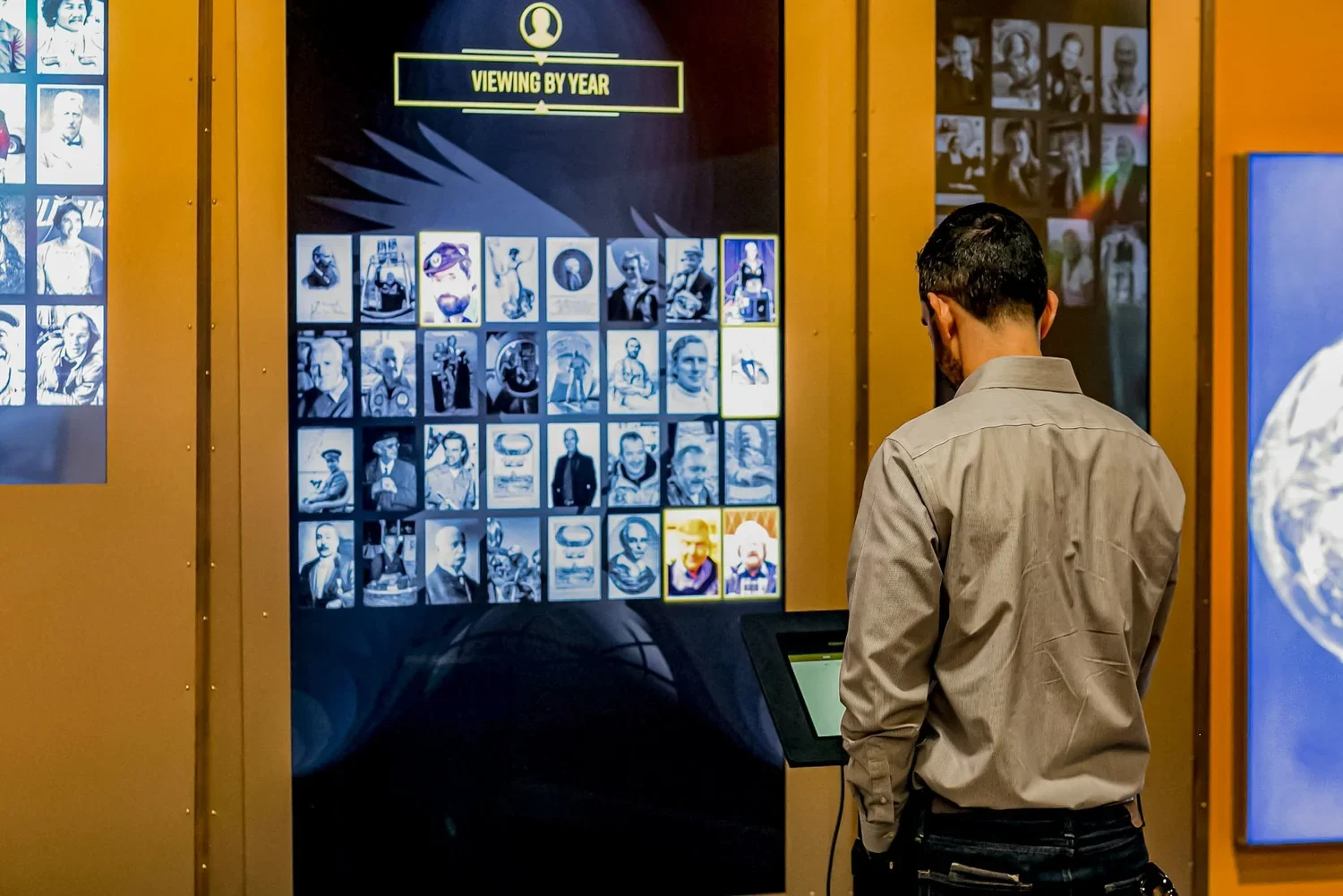
Designed the experience to make historical exploration accessible through intuitive touch-based interaction rather than static archival browsing.
Flexible content framework
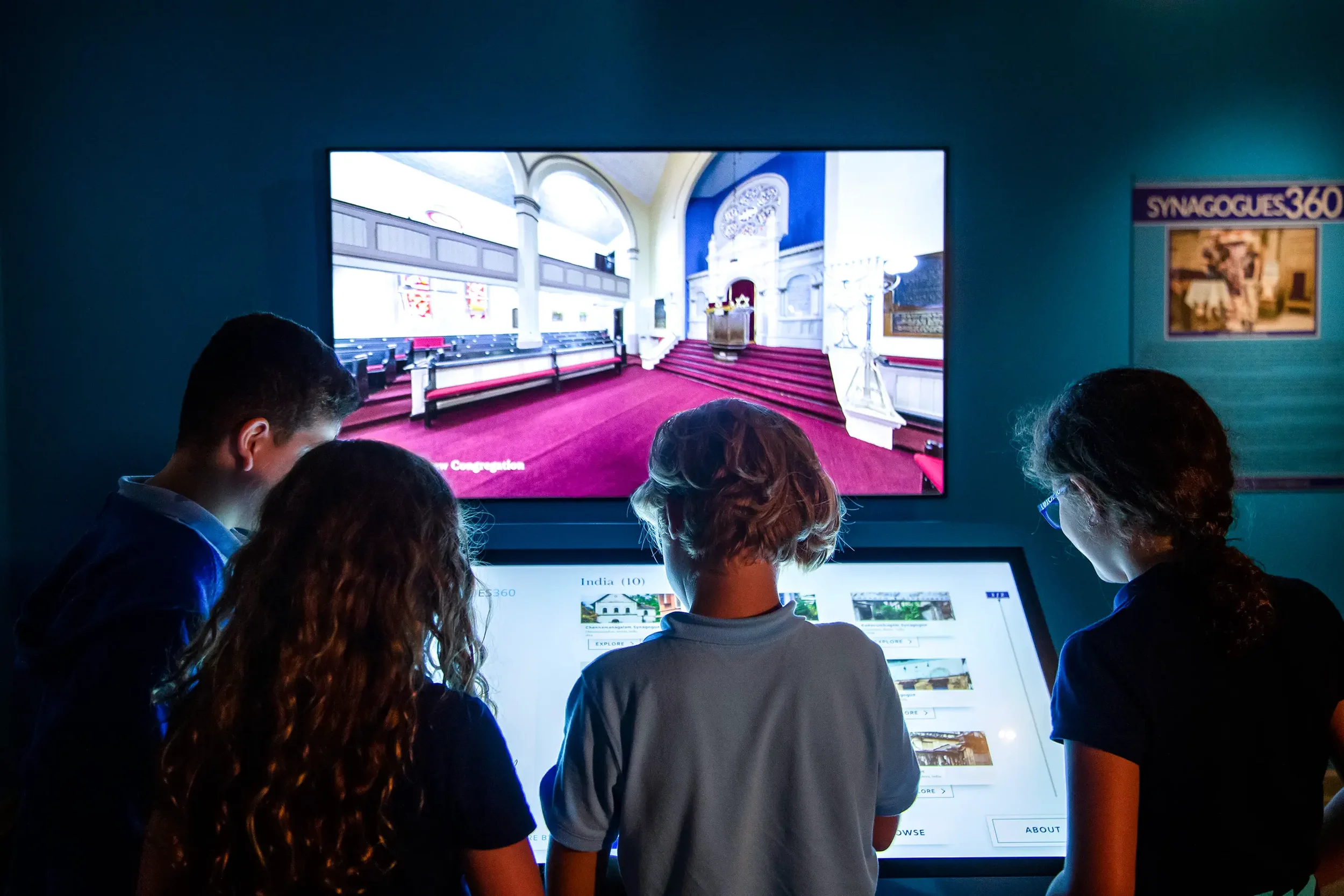
Built a modular system capable of supporting photographs, documents, maps, newspaper scans, and media assets across evolving collections.
Historical authenticity
Developed a visual language inspired by historical print materials and archival textures while maintaining usability on modern interactive displays.
Execution
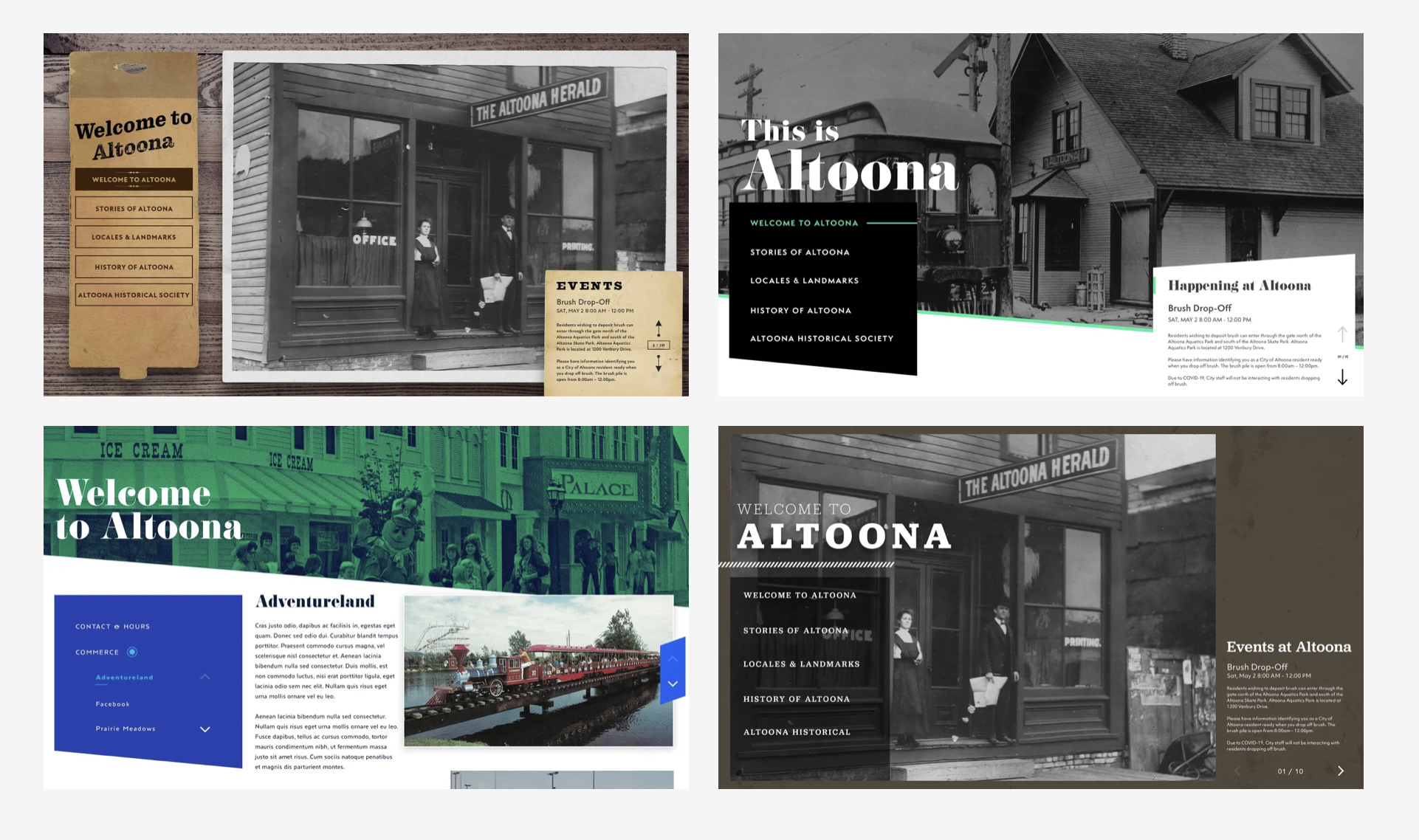
Information Architecture
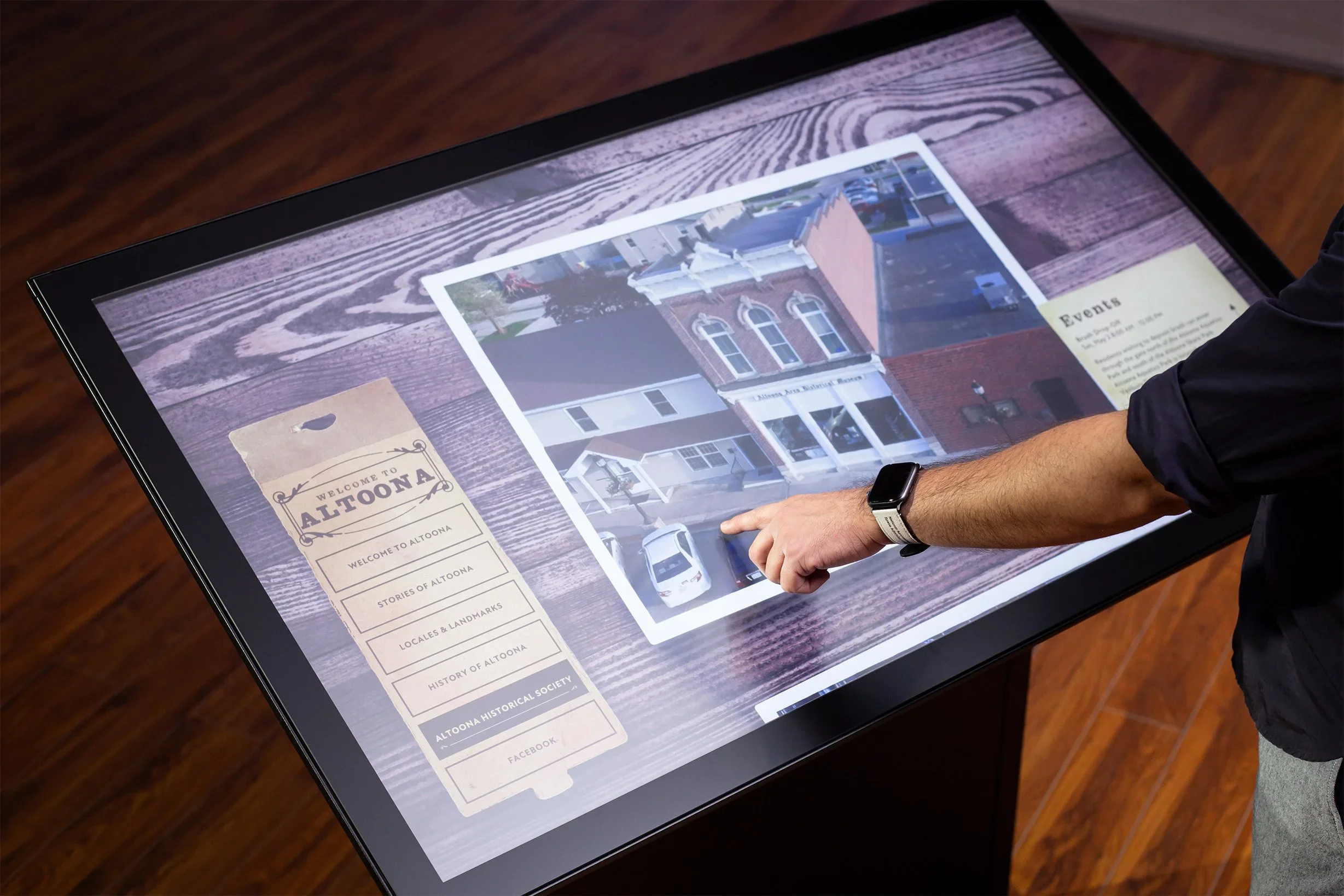
A flexible content structure was developed to organize historical records across categories, locations, timelines, and points of interest while supporting both casual browsing and deeper exploration.
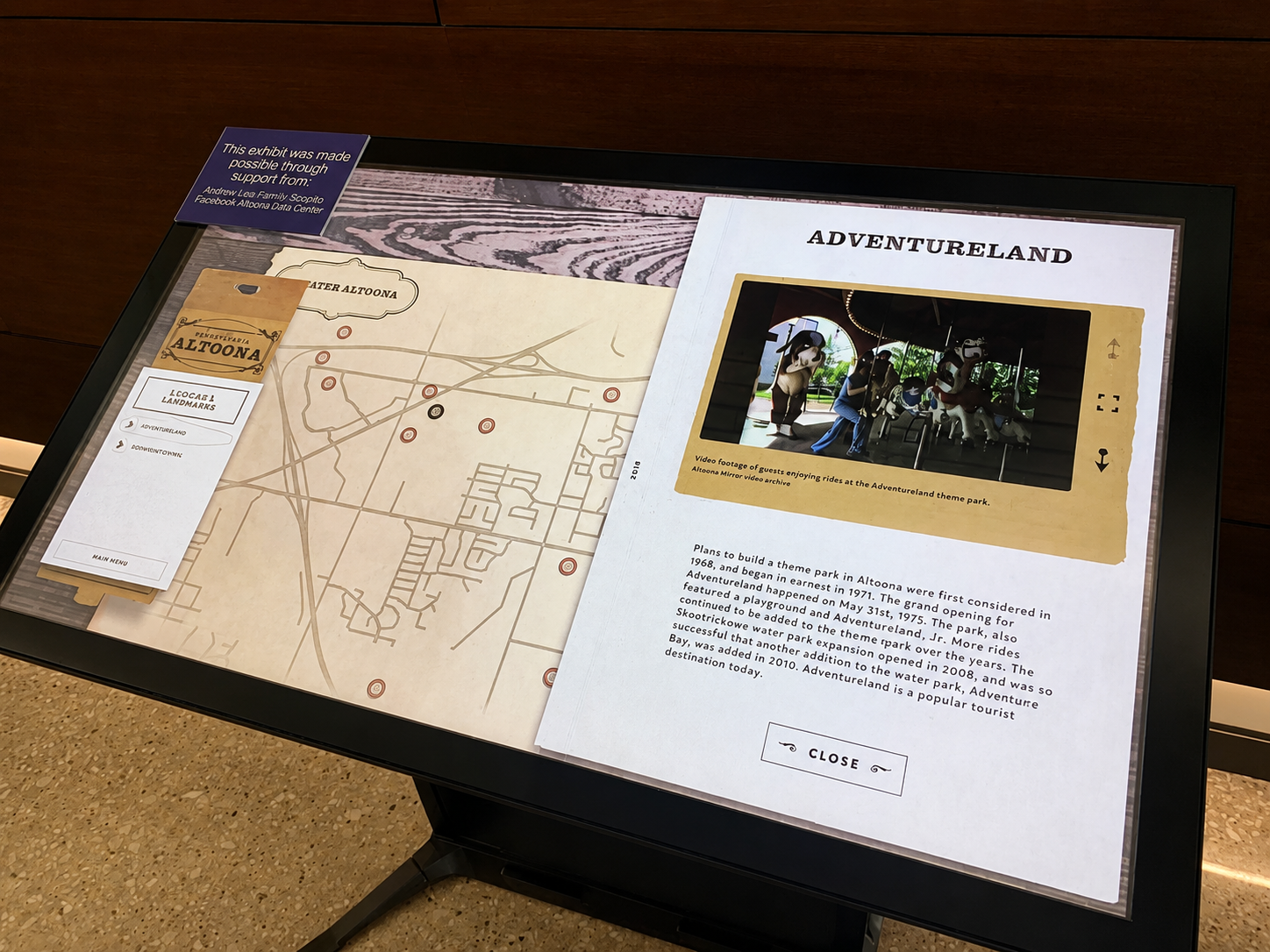
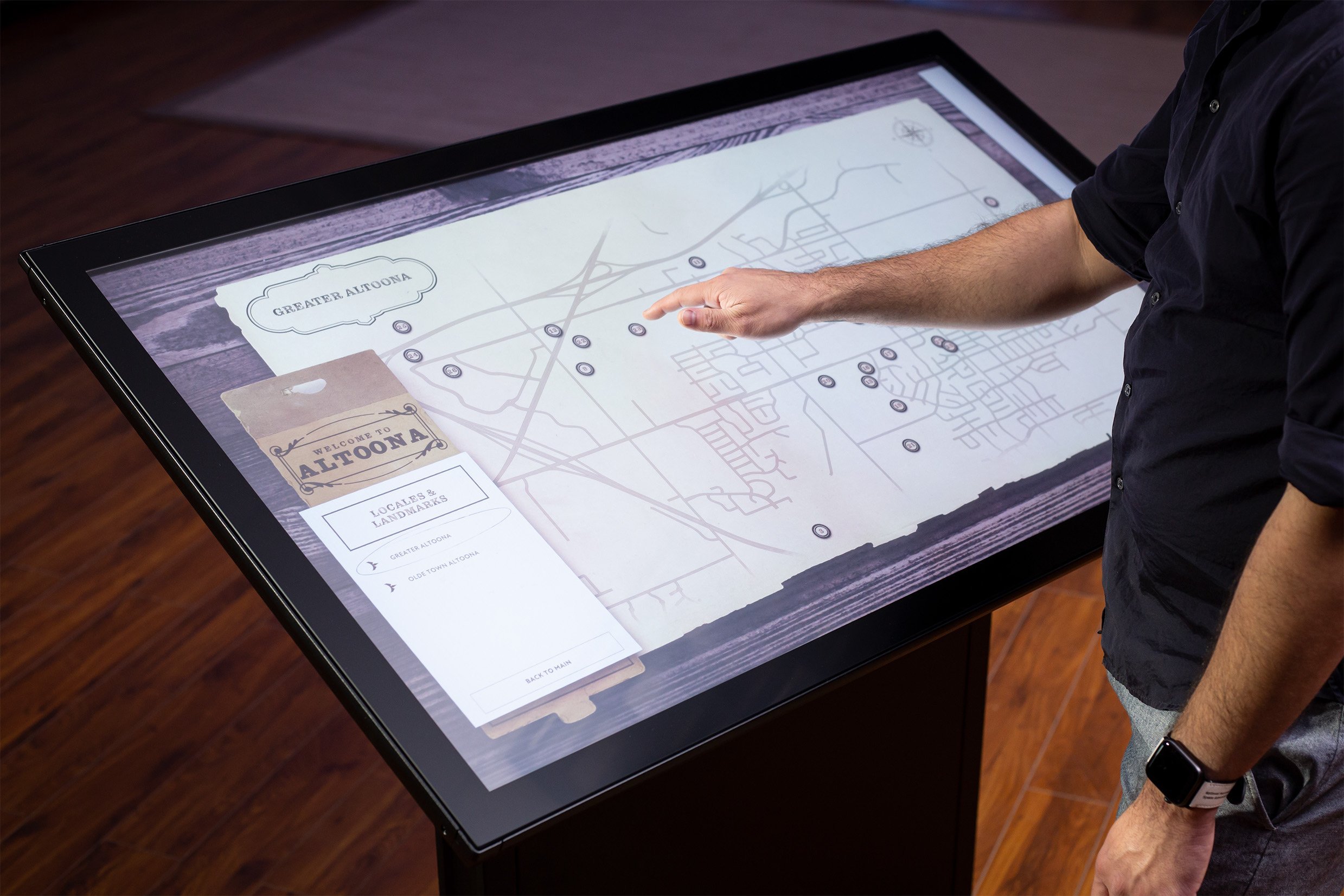
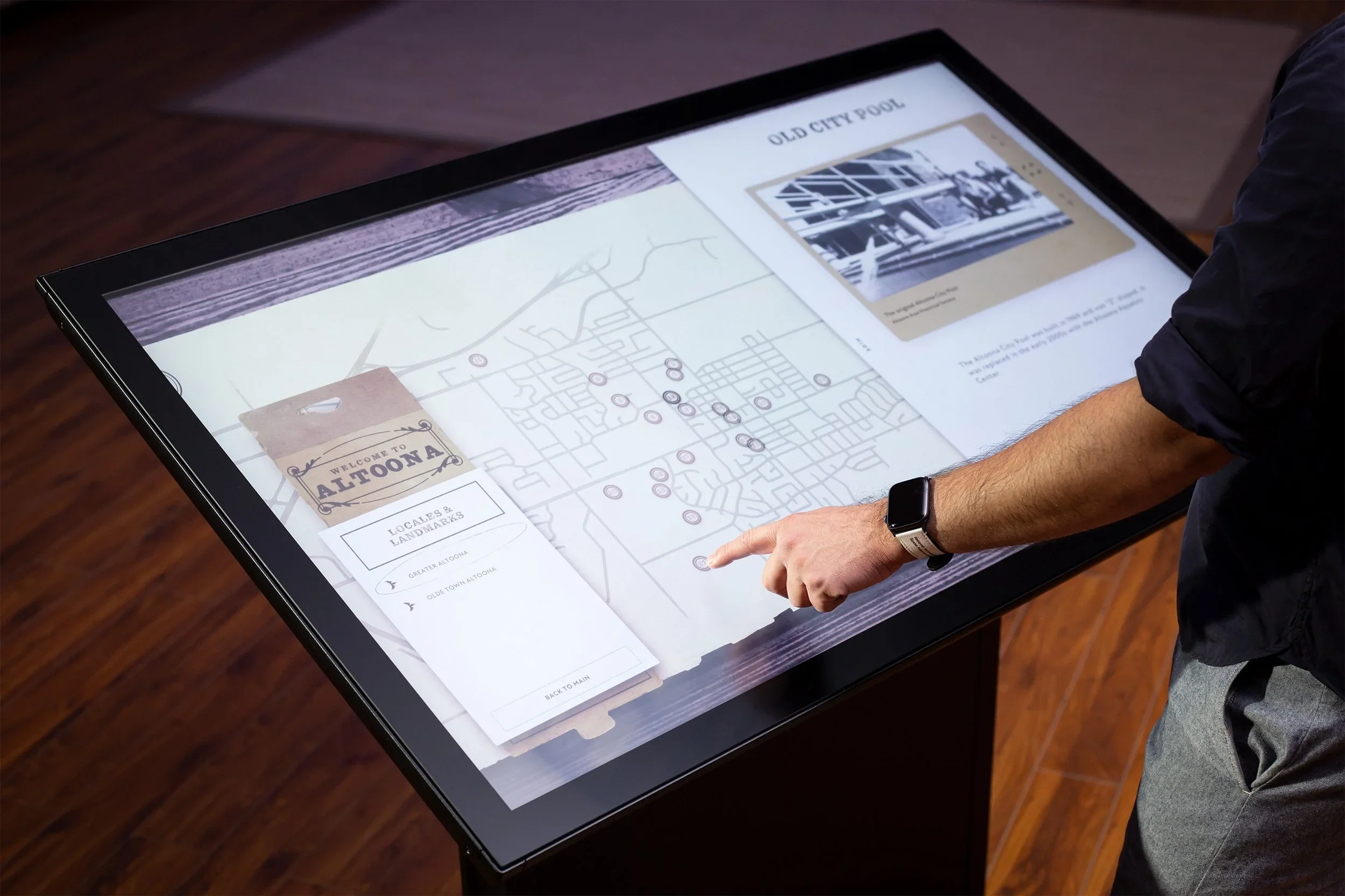
Custom Mapping Experience
A vector-based interactive map allowed visitors to explore Altoona through geographically connected stories, archival imagery, and local historical landmarks.
Points of interest dynamically revealed photographs, documents, video, and supporting historical media tied to specific locations throughout the city.
Archival Restoration
Many source materials originated from low-resolution scans, converted documents, and aging printed artifacts.
Assets were carefully restored, reformatted, and optimized for large-scale 4K kiosk presentation while preserving the integrity and character of the original materials.
Interface System
The kiosk interface was designed to support visitors across varying levels of technical familiarity, emphasizing clarity, large touch targets, and intuitive exploration patterns.
The experience prioritized readability, pacing, and low-friction interaction over conventional application complexity.
Impact
The final experience transformed fragmented archival material into an accessible public-facing historical system that supported education, tourism, and community preservation.
By connecting interface design, mapping systems, and archival restoration into a unified experience, the project allowed visitors to engage with Altoona’s history through exploration rather than passive observation.
The modular structure also enabled the Historical Society to continuously expand and evolve the archive over time.