California Science Center
A series of interactive exhibition experiences translating genetics, biological development, and evolutionary systems into accessible public learning environments
INTERACTIVE EXHIBITIONS — SCIENCE EDUCATION — MULTI-USER EXPERIENCES
Context
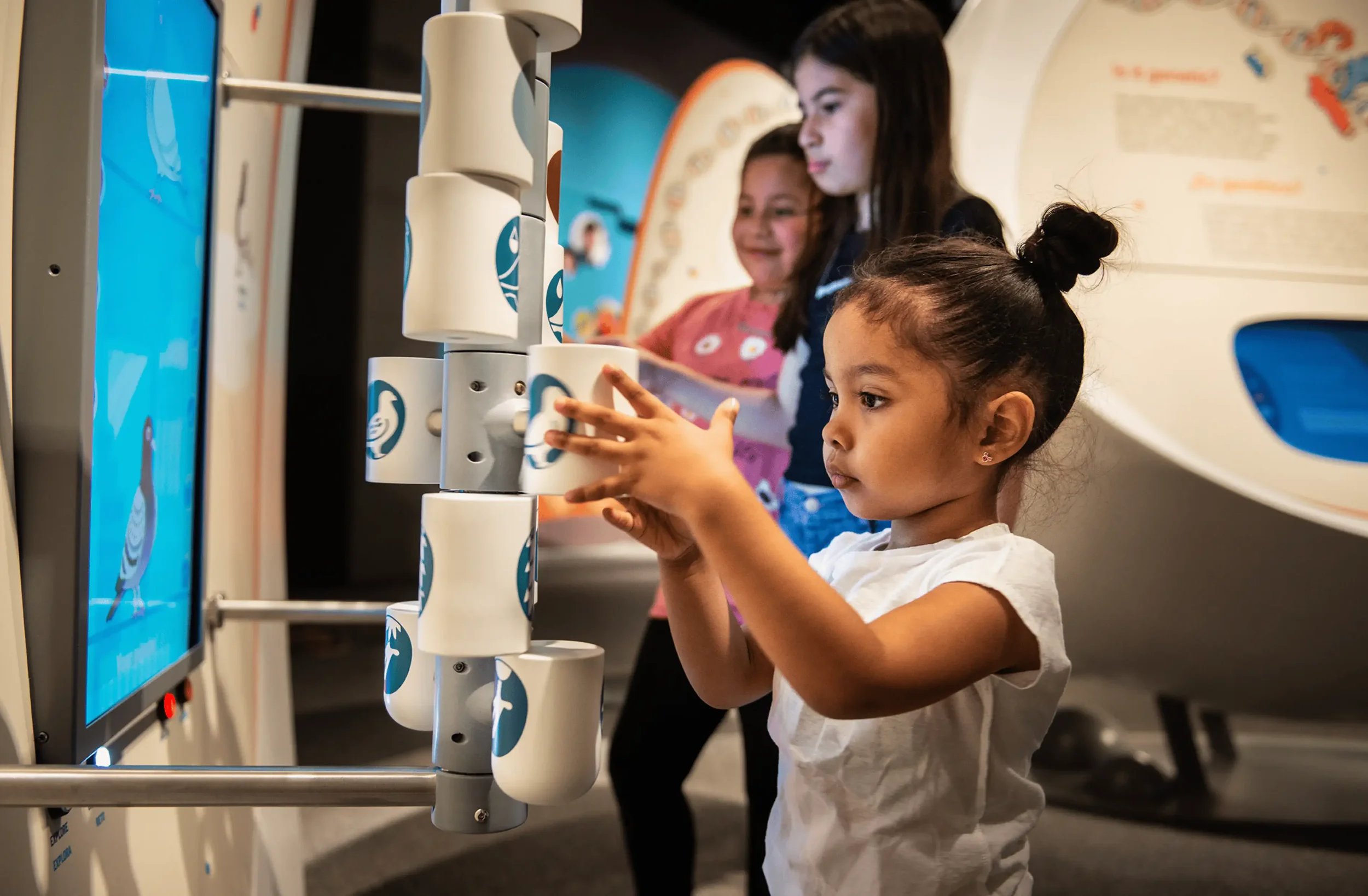
The California Science Center required a collection of interactive educational experiences capable of translating complex biological and genetic concepts into approachable, engaging public-facing exhibits.
The project combined game systems, scientific visualization, bilingual content management, and large-scale interactive environments designed for diverse audiences and age groups.
Problem
• Scientific concepts needed to remain accessible without oversimplification
• Experiences required engagement across varied age groups and learning styles
• Legacy media assets lacked sufficient resolution for large interactive displays
• Multiple exhibits required consistent interaction patterns and educational clarity
• Interfaces needed to support bilingual English and Spanish content systems
Approach
Learning through interaction
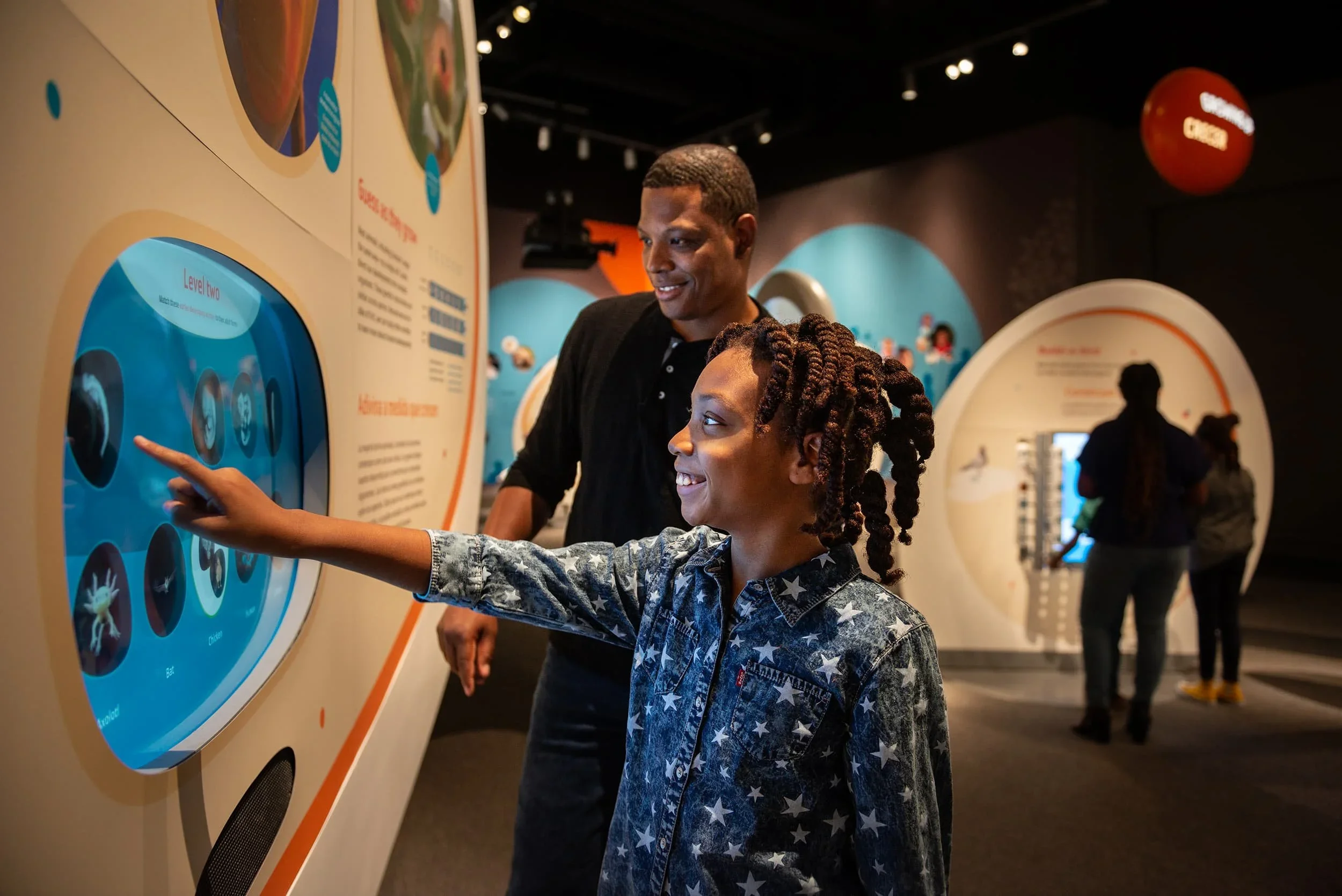
Experiences were designed around direct participation, allowing visitors to understand biological systems through experimentation, comparison, and discovery rather than passive observation.
Accessible scientific systems
Complex scientific concepts were translated into clear visual structures, touch-based interactions, and guided educational pathways accessible to broad public audiences.
Scalable exhibition framework
A modular design system was developed to support multiple exhibit types, bilingual content structures, evolving educational material, and large-scale interactive environments.
Execution
System Overview
A unified interaction system designed to connect archival content, interface behavior, and physical space across multiple display surfaces.
Genetic Visualization System
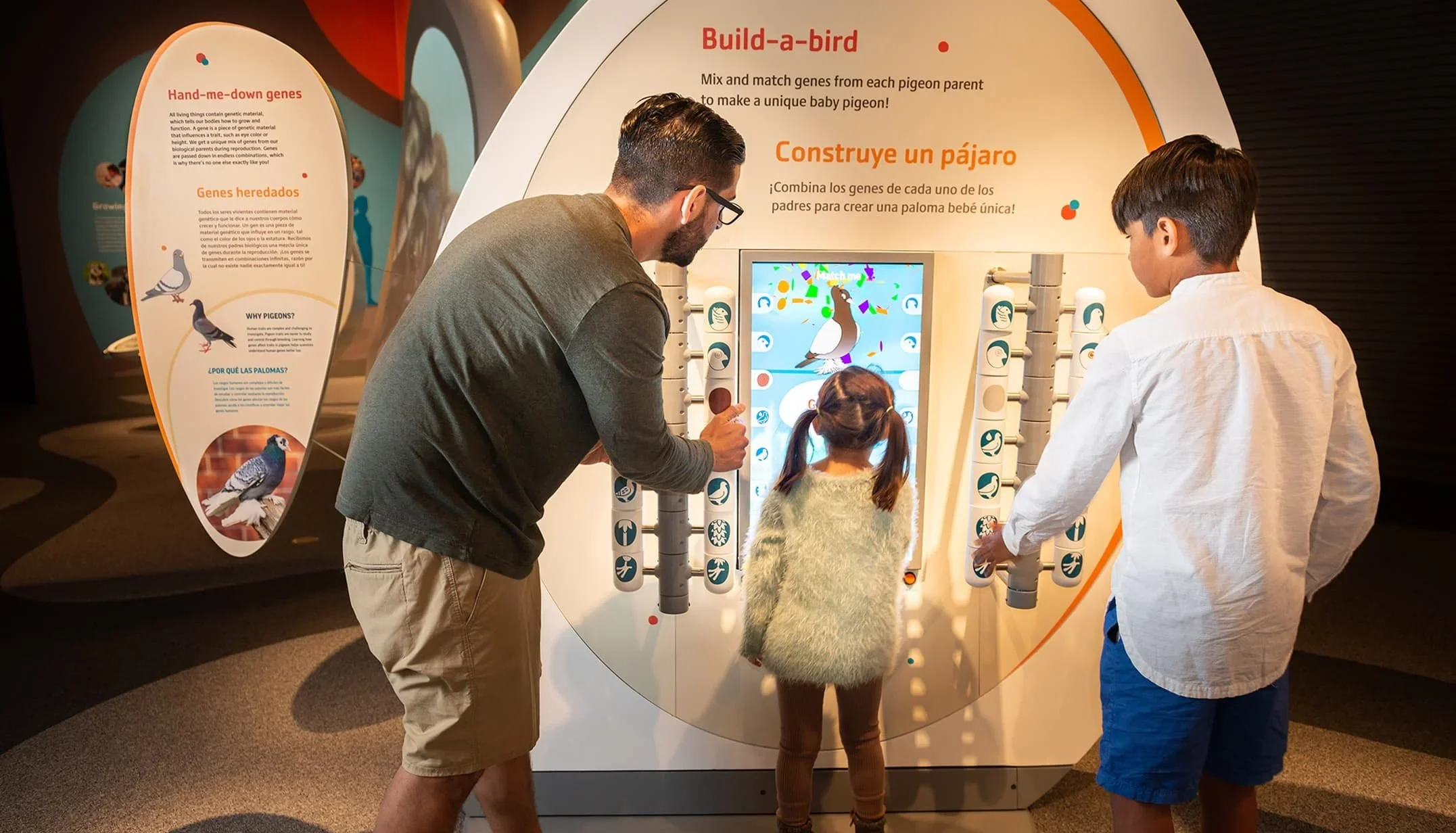
Legacy flash-based assets were reconstructed and resampled for large-scale interactive environments, enabling real-time visualization of genetic traits and biological variation across hundreds of dynamically generated assets.
A collaborative pipeline was developed to preserve asset integrity while supporting Unity-based interactive systems and high-resolution exhibition displays.
Interactive Learning Models
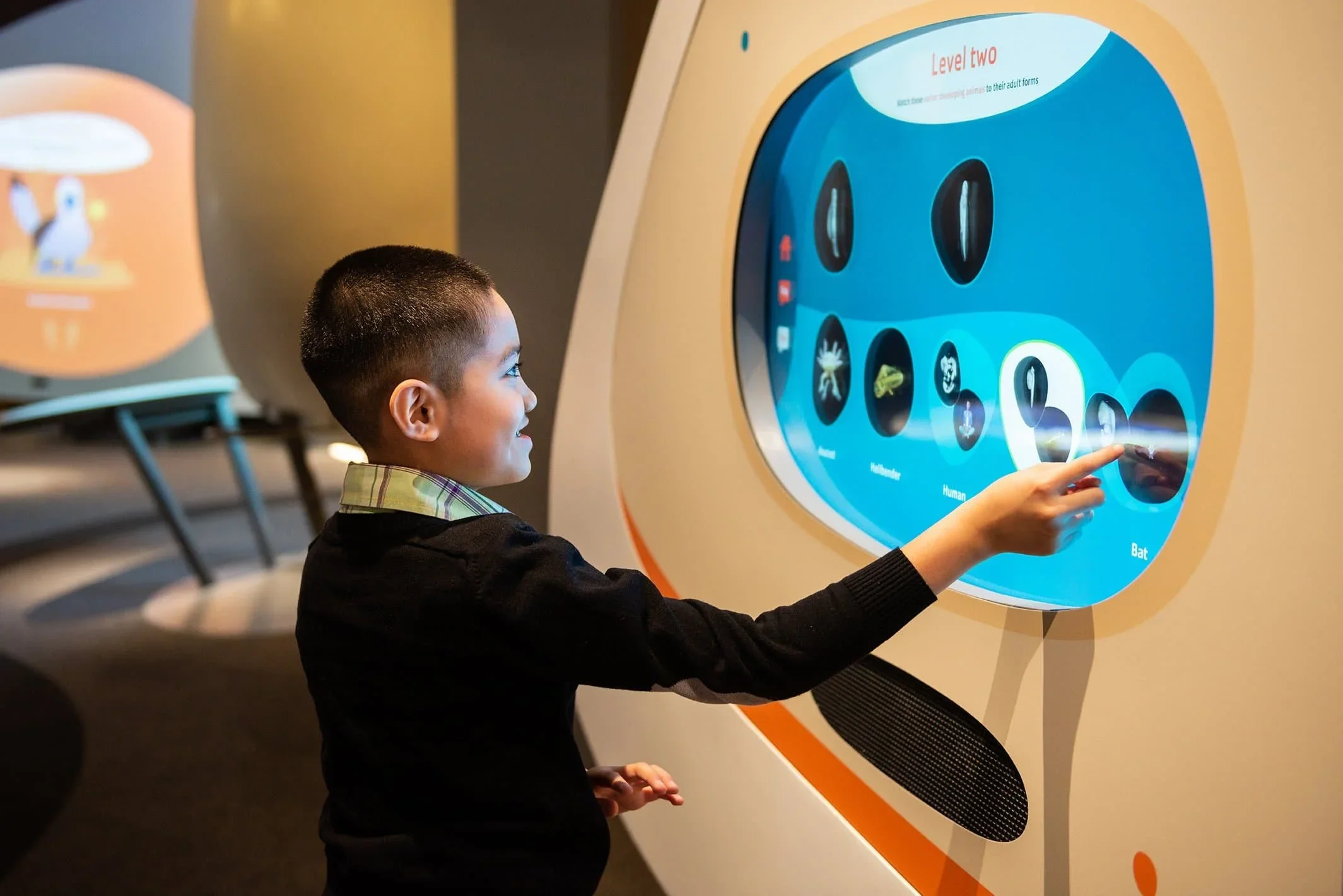
Games and interactive experiences were structured around simple, intuitive mechanics that encouraged exploration while gradually introducing more complex scientific concepts.
Interactions prioritized immediate comprehension, onboarding clarity, and multi-generational accessibility within public museum environments.
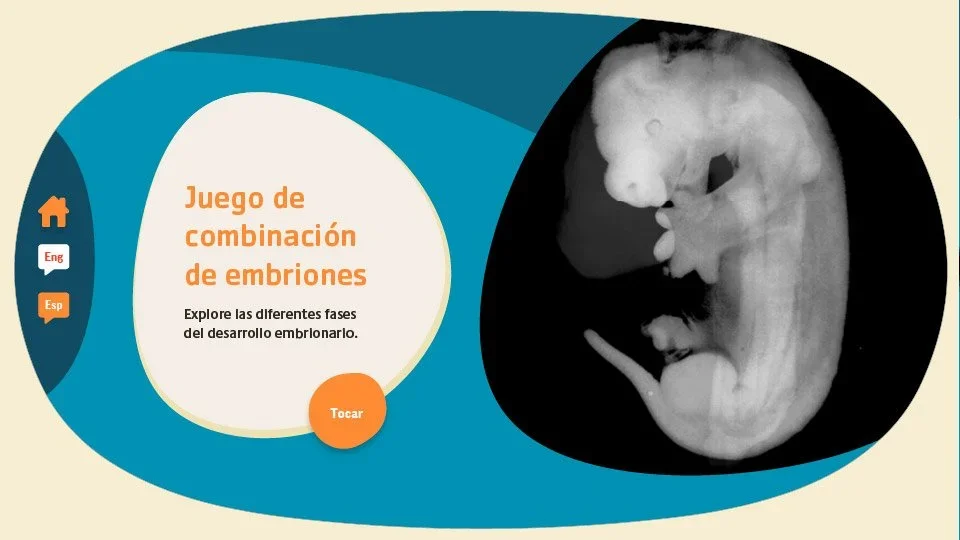
Bilingual Content System
The exhibition required a flexible bilingual content structure supporting English and Spanish instructional systems, narration, UI components, and educational content across multiple exhibits.
Content management workflows were designed to maintain consistency while supporting evolving scientific narratives and exhibit updates.
Exhibition Interface Design
Interfaces were designed for high-traffic museum environments, emphasizing large touch targets, visual clarity, durable interaction patterns, and low-friction navigation for visitors with varying technical familiarity.
The resulting system balanced scientific depth with accessibility and playful exploration.
System Behavior
Interactions dynamically responded to user selections, biological combinations, and exhibit-specific behaviors, allowing visitors to experiment with genetics, embryonic development, and species relationships through immediate visual feedback.
The system emphasized participation and experimentation as core educational tools rather than static information delivery.
Impact
The final exhibition experiences transformed complex scientific material into accessible interactive systems that encouraged curiosity, experimentation, and collaborative learning across visitors of all ages.
By combining scientific visualization, bilingual content systems, and interaction-driven educational design, the project created a flexible exhibition framework capable of supporting long-term public engagement and evolving educational content.