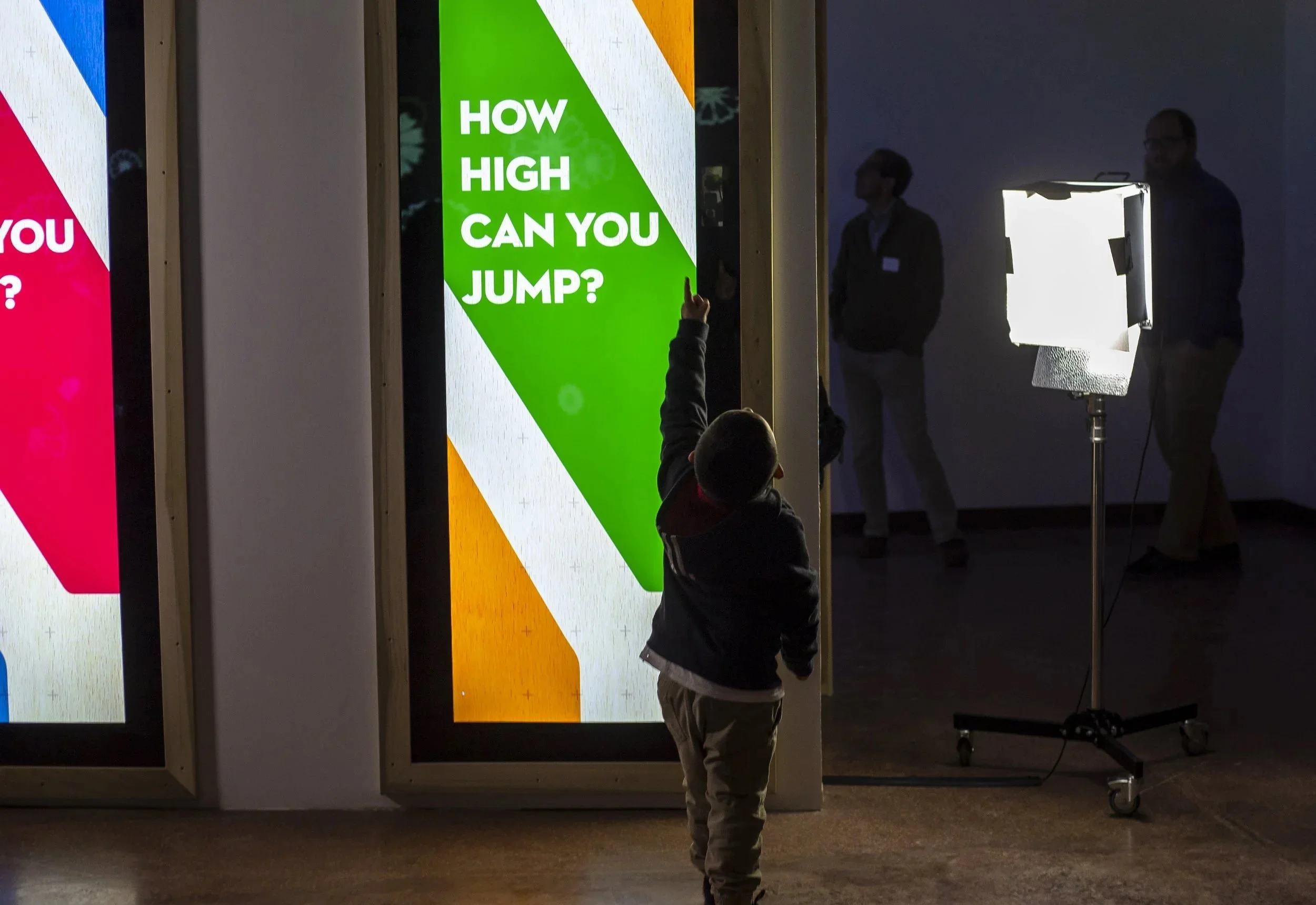
Cayton
Children’s Museum
A multi-surface system translating archival content into interactive exploration of hot air ballooning
MOTION INTERACTION — PLAYFUL LEARNING — EXHIBITION SYSTEMS
Context
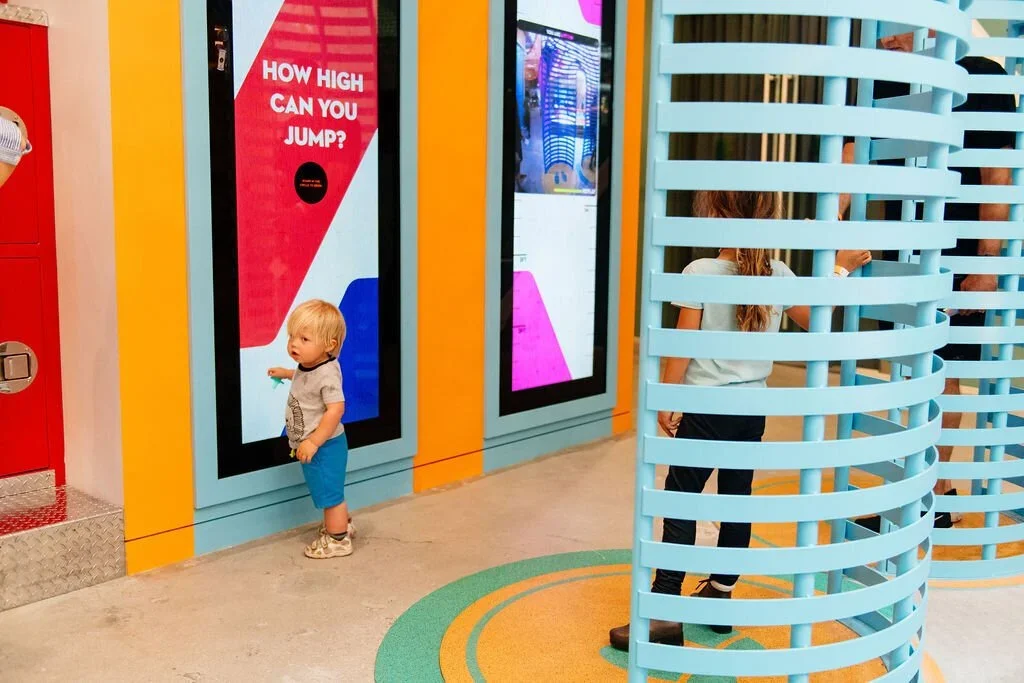
The Cayton Children’s Museum required an interactive experience that could engage children through physical movement without relying on touchscreens, buttons, controllers, or traditional interfaces.
The challenge was to create a system that visitors could immediately understand through motion alone while maintaining accuracy, reliability, and accessibility within a high-traffic museum environment.
Problem
• No tactile interface or traditional navigation system
• Required immediate understanding across varied age groups
• Motion sensing needed to remain accurate and reliable
• High visitor turnover demanded low-friction interaction
• Experience needed flexibility for future expansion and new features
Approach
Invisible Interaction
The experience was designed to remove conventional interface elements entirely, allowing physical movement to become the primary method of interaction.
Play as Onboarding
Rather than teaching visitors how to use the exhibit, the system was structured so interaction could be discovered naturally through jumping, movement, and experimentation.
Future-Ready Architecture
The underlying system was designed to support future enhancements, visitor profiles, persistent data, and repeat visitation experiences.
Execution
Motion-Sensing System
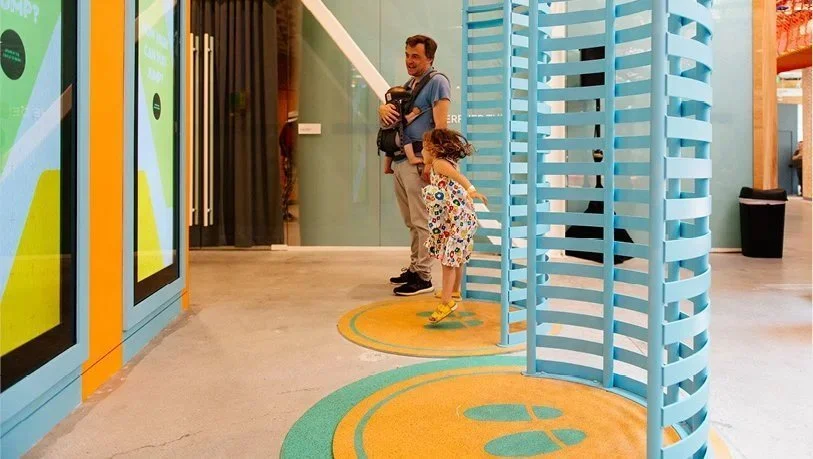
A controller-free experience was developed around autonomous motion detection, allowing visitors to measure their height, jump performance, and movement without requiring direct physical input.
The challenge was not simply tracking movement but creating an interaction model that felt natural, immediate, and understandable to children within seconds of engagement.
Interaction Without Interfaces
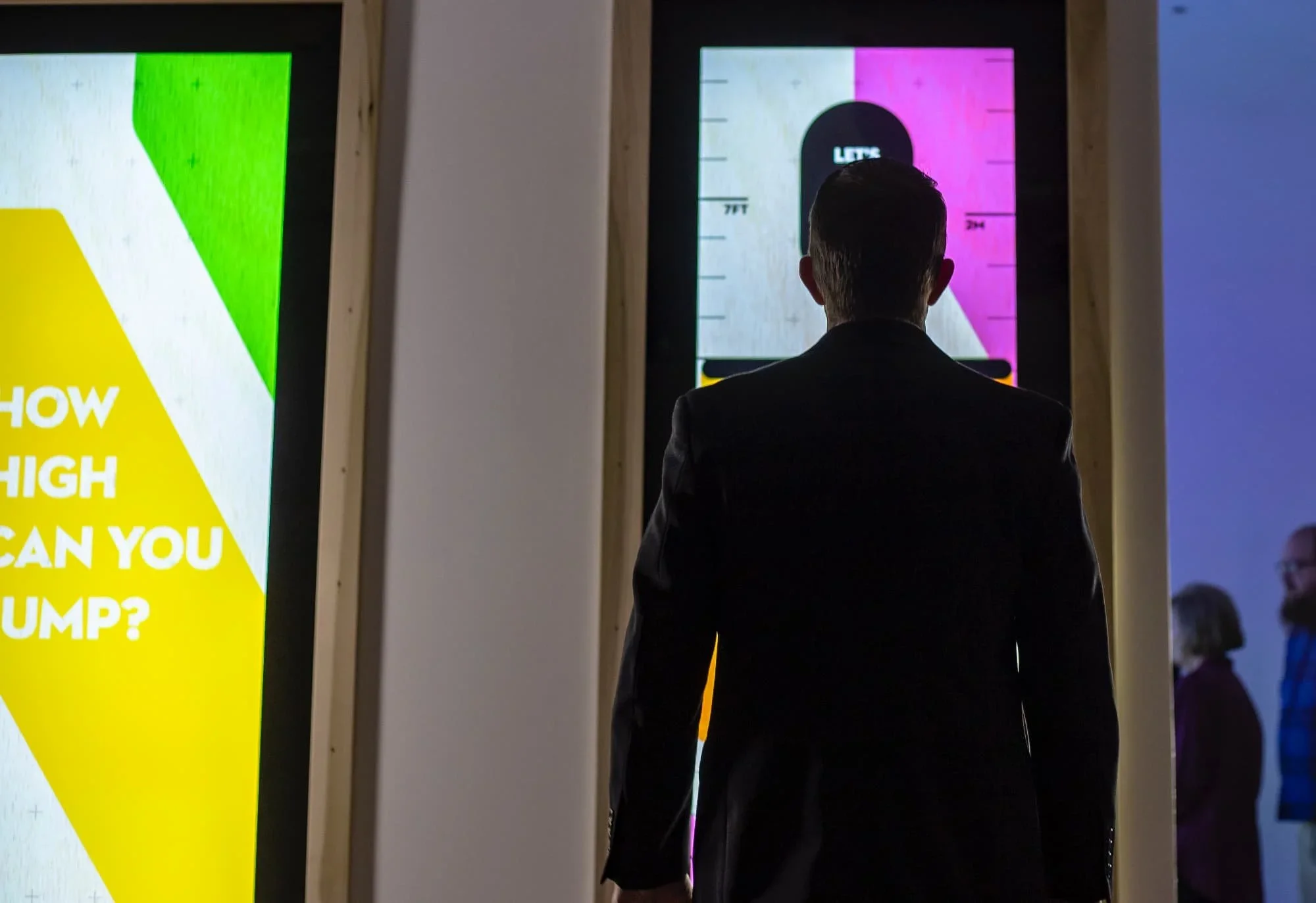
Because the exhibition relied entirely on body movement, extensive usability testing was conducted to refine onboarding, feedback states, timing, and system behavior.
The resulting experience reduced cognitive friction and enabled visitors to participate without instruction, creating a more intuitive and inclusive interaction model.
Measuring Motion
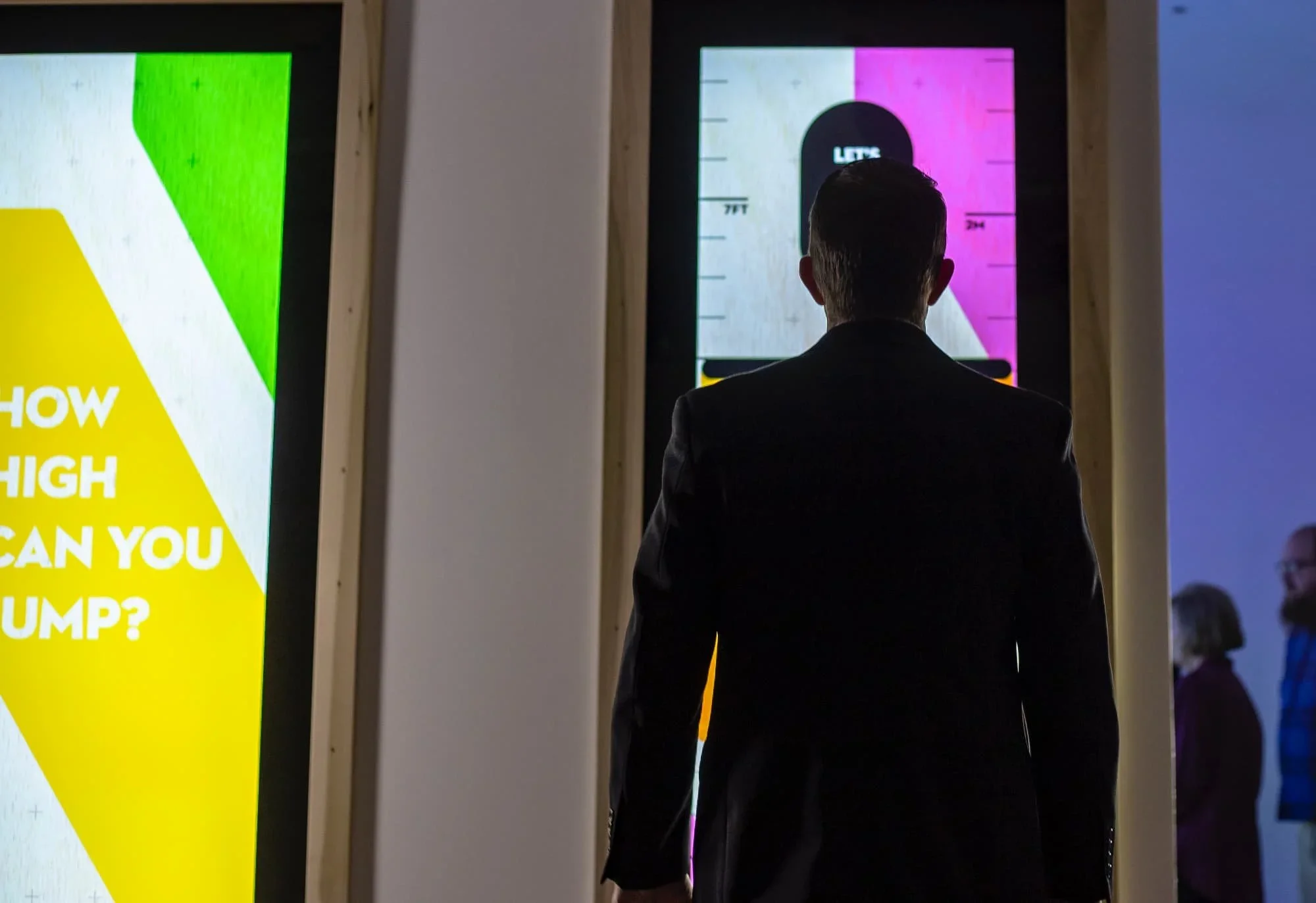
Custom hardware and software systems were developed to accurately calculate visitor height, jump distance, and movement in real time.
The experience required extensive calibration and testing to ensure measurements remained reliable while preserving a playful and approachable interaction.
System Behavior
The experience continuously interprets visitor movement, translating physical actions into measurable outcomes and immediate visual feedback.
By eliminating traditional controls, the exhibit encourages experimentation and discovery, allowing visitors to learn the system through participation rather than instruction.
Future Vision
Persistent Play
Research and development explored the possibility of RFID-enabled visitor profiles capable of storing jump performance, height data, and recorded moments over time.
The concept envisioned an experience where children could return years later to compare growth, physical development, and performance against previous visits, transforming a single interaction into an evolving personal archive.
Impact
The system created a cohesive experience across multiple displays, improving accessibility and enabling users to explore archival content more intuitively.
By unifying content, interaction, and environment, the installation transformed static material into an interactive system that supports both casual discovery and deeper engagement.